Hello! Welcome to visitShanghai Bosen Environmental Technology Co., LtdOfficial website!
2 t/h Ultra-Pure Water (UPW) System
Technical Specification · Equipment Selection and Process Overview
Water resistivity ≥ 18.0 MΩ·cm (25°C) | Designed for the production of nanofiltration materials and high-purity rinsing water applications
device name | 2 t/h ultrapure water preparation system (two-stage RO + EDI process) |
Design water output rate | ≥ 2.0 m³/h(25℃ |
Water output quality | Resistivity ≥ 18.0 MΩ·cm – meets electronic-grade/nanometer-grade water quality standards |
main application | Nanofiltration material synthesis, dispersion, coating, and high-purity rinsing water |
Preparation Unit | Water Treatment Process and Equipment Technology Department |
catalogue
1. Overview
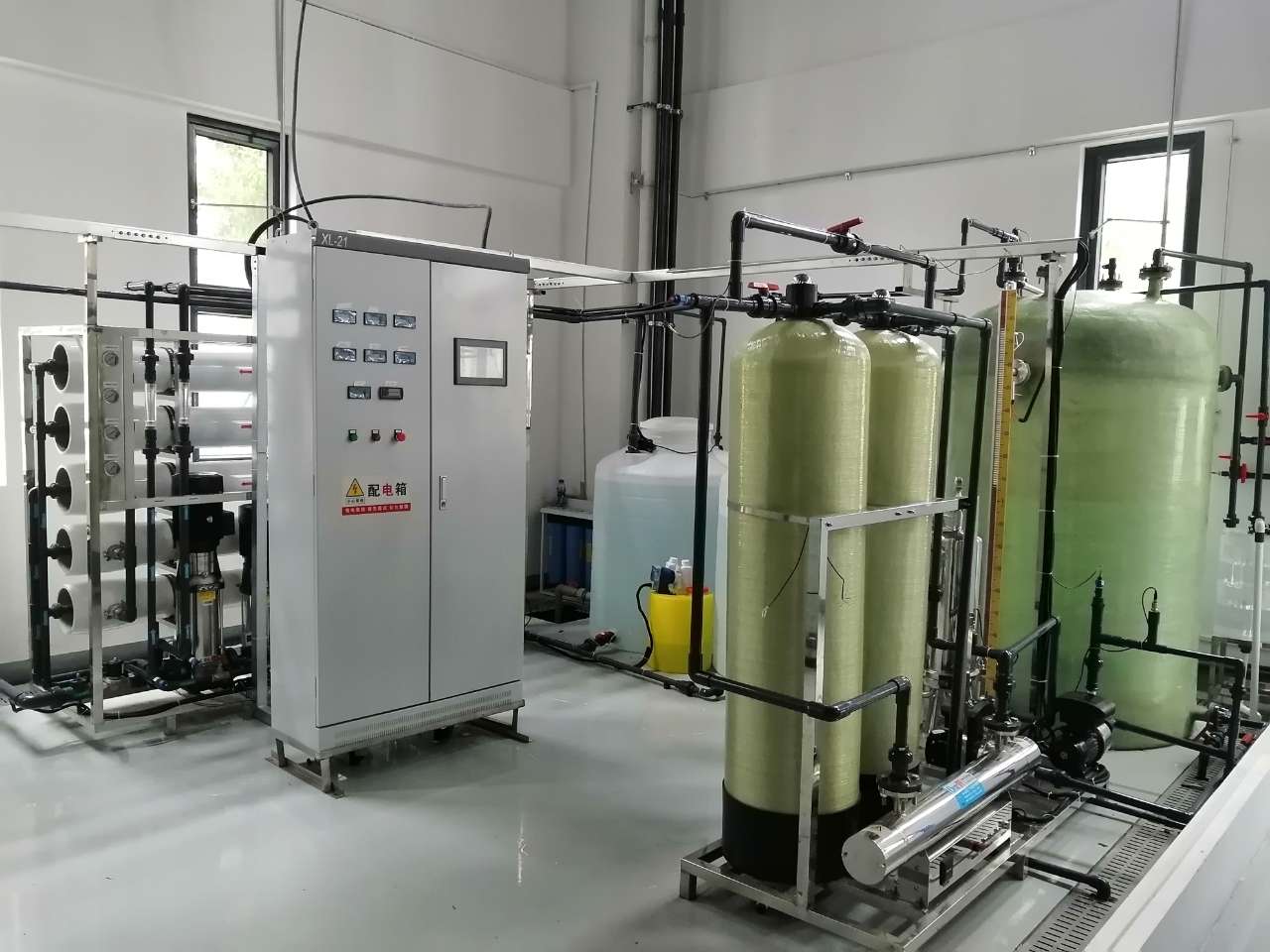
This equipment is a continuous ultra-pure water (UPW) preparation system with a water production rate of 2 tons per hour (at 25°C). It employs a mainstream process route comprising "pre-treatment + dual-stage reverse osmosis (RO) + electrodeionization (EDI)", ensuring that the final product water maintains a stable resistivity of ≥ 18.0 MΩ·cm (at 25°C). This meets the stringent water quality requirements for ultra-pure water required during the synthesis, dispersion, coating, modification, and final rinsing stages of nanofiltration membrane (NF) materials.
The system features a modular integrated design, comprising a pre-treatment unit, a reverse osmosis unit, an EDI fine-treatment unit, a post-treatment sterilization unit, a pure water storage and distribution unit, a PLC automatic control cabinet, and online instrumentation. It boasts a compact structure, high degree of automation, stable operation, and easy maintenance.
Nanofiltration materials and their membrane elements are highly sensitive to impurities introduced during manufacturing. Even trace amounts of ions, particles, organic compounds, microorganisms, or residual active chlorine in water can alter the surface charge of the materials, clog nanoscale pores, or induce irreversible fouling, thereby affecting their separation efficiency, flux, and service life. Therefore, the water used in the production of nanofiltration materials must meet the following requirements:
• Ultra-low ion content – prevents the deposition of metal ions (e.g., Na⁺, Ca²⁺, Fe³⁺) on the material surface or their coordination with active functional groups;
• Ultra-low total organic carbon (TOC) – prevents the adsorption of organic matter within the membrane pores, thereby avoiding flux decay;
• Ultra-low particle and microbial content – prevents nanopore clogging and biological contamination;
• No residual chlorine and oxidizing agents – protects organic polymer materials from oxidative degradation;
• Highly stable water quality – ensures consistent product performance across batches.
This equipment is designed specifically to meet the aforementioned requirements by maintaining the water resistivity at ≥ 18.0 MΩ·cm and simultaneously controlling parameters such as TOC, particulates, bacteria, and silicon dioxide, thereby ensuring the production quality of nano-scale materials.
project | metric | remarks |
Rated water production capacity | ≥ 2.0 m³/h | 25°C – Calibration |
Water resistivity | ≥ 18.0 MΩ·cm | 25°C Online Monitoring |
Water production conductivity | ≤ 0.055 μS/cm | —— |
Overall system recovery rate | ≥ 60 % | Raw water → Ultra-pure water |
Raw water consumption | Approximately 3.2 m³/h | Municipal water supply |
run mode | Fully automatic continuous operation | 24-hour unattended operation |
source | AC 380V / 50Hz / Three-phase, five-wire system | Control: 220V |
Installation Type | Integrated pedestal-mounted / Split-frame unit | On-site water and power connection |
• Mature and reliable technology: The two-stage RO process removes over 99% of ions and organic compounds, while the EDI system provides continuous deep desalination without the need for acid-alkali regeneration; the effluent conductivity remains stable at 18 MΩ·cm.
• High and stable water quality: End-of-pipe configuration featuring dual-wavelength UV disinfection at 185/254 nm combined with 0.22 μm terminal filtration, effectively degrading TOC while retaining particulates and microorganisms;
• Green Operation: EDI replaces traditional mixed-bed systems, eliminating acid and alkali discharge and complying with environmental protection requirements;
• High automation: Centralized control via PLC + touchscreen – automatic start/stop, flushing, protection, and alarm functions – reducing reliance on manual operation;
• Online monitoring: real-time display and interlocking for resistivity (conductivity), flow rate, pressure, and liquid level;
• Material Safety: Areas in contact with pure water are constructed from SUS304/316L stainless steel or sanitary-grade plastic to prevent secondary contamination.
The process design, manufacturing, inspection, and water quality classification of this equipment are primarily based on and refer to the following national and industry standards and specifications:
Standard / Specification | name | Applicable Content |
GB/T 11446.1—2013 | Electronic-grade water | Water Quality Classification and Indicators (EW-Ⅰ Class) |
GB 5749—2022 | Drinking Water Sanitation Standard | Raw water (municipal tap water) water quality reference |
GB 50015 | Code for Design of Building Water Supply and Drainage Systems | Water Supply and Drainage Systems and Pipeline Design |
GB/T 19249—2017 | Reverse Osmosis Water Treatment Equipment | RO System Design, Manufacturing and Inspection |
GB/Z 18920, etc. | Industrial water softening and desalination-related specifications | Pre-treatment and Fine-treatment Design |
SEMI F63 | 《Guide for Ultrapure Water Used in Semiconductor Processing》 | Ultra-pure water specifications and design philosophy (Reference) |
JB/T 2932 | Water Treatment Equipment – Technical Specifications | General Requirements for Equipment Manufacturing |
Note: The water quality parameters are strictly controlled in accordance with the requirements specified in the "Electronic Grade Water" (EW-Ⅰ) and "Semiconductor Grade Ultra-Pure Water" standards, ensuring compliance with the rigorous specifications applicable to the production of nanofiltration materials.
The system uses municipal tap water as its water source; the design has been verified against the following water quality requirements (for actual projects, refer to the on-site water quality report):
project | unit | Design Value | project | unit | Design Value |
conductivity | μS/cm | ≤ 500 | iron | mg/L | ≤ 0.3 |
turbidity | NTU | ≤ 5 | manganese | mg/L | ≤ 0.1 |
Total hardness (CaCO₃) | mg/L | ≤ 150 | residual chlorine | mg/L | ≤ 0.3 |
total alkalinity | mg/L | ≤ 120 | pH | — | 6.5 ~ 8.5 |
TDS | mg/L | ≤ 300 | temperature | ℃ | 5 ~ 35 |
total hardness | mg/L | ≤ 150 | Water supply pressure | MPa | 0.2 ~ 0.4 |
If the raw water quality is poor (e.g., high hardness, high silicon content, or high organic matter content), chemical dosing (anti-scaling/Reduction/PH adjustment) can be added during the pretreatment stage, or an ultrafiltration (UF) unit can be installed to ensure the long-term stable operation of the RO system.
The system effluent must simultaneously meet the following criteria; the core parameter – resistivity – must remain stable at ≥ 18.0 MΩ·cm at 25°C:
surveillance project | unit | metric | surveillance project | unit | metric |
Resistivity (25°C) | MΩ·cm | ≥ 18.0 | SiO₂ | μg/L | ≤ 2 |
Conductivity (25°C) | μS/cm | ≤ 0.055 | Na⁺ | μg/L | ≤ 1 |
TOC | ppb | ≤ 30 | Cl⁻ | μg/L | ≤ 1 |
total number of bacteria | CFU/mL | ≤ 0.1 | total hardness | μg/L | ≈ 0 |
Particulate matter (≥0.22 μm) | individual/mL | ≤ 1 | pH | — | 6.0 ~ 7.5 |
Dissolved oxygen (optional) | μg/L | ≤ 50 | Particulates/Endotoxins | — | According to process requirements |
• Resistivity ≥ 18.0 MΩ·cm: This indicates an extremely low total ion concentration in the water and serves as the core criterion for ultra-pure water;
• TOC ≤ 30 ppb: Controls organic matter to prevent adsorption-related contamination in nanopores; safeguarded by a combination of activated carbon and 185 nm ultraviolet light;
• Bacteria ≤ 0.1 CFU/mL: Dual control via 254 nm UV sterilization + 0.22 μm terminal filtration;
• Particulate content ≤ 1 particle/mL (≥0.22 μm): Terminal microporous filtration ensures no particulate introduction during nanomaterial coating or rinsing;
• SiO₂ ≤ 2 μg/L: The high-efficiency silicon rejection capability of the two-stage RO system prevents silicon scale contamination of the nanomaterial surface.
To meet the requirement of "resistivity ≥ 18 MΩ·cm + control of nanomaterial-grade impurities," this equipment employs a mainstream combination of "two-stage reverse osmosis + EDI," as explained below:
Process Plan | merit | shortcoming | usability |
Single-stage RO + Mixed Bed | Water resistivity can reach 18 MΩ·cm. | Requires acid–alkali regeneration, involves discharge operations, and has complex operating procedures. | Outdated manufacturing processes are being phased out. |
Two-stage RO + Mixed Bed | High and stable water quality | Still relies on acid–base regeneration | Medium scale |
Two-stage RO + EDI (This Solution) | Continuous desalination, acid-and alkali-free operation, automation, and stable water quality | Initial investment is slightly higher. | ★ Recommended – eco-friendly and efficient |
Note: For applications requiring a higher resistivity margin (e.g., a long-term requirement of ≥ 18.2 MΩ·cm) or where the raw water quality fluctuates significantly, an additional polishing mixed-bed unit (with nuclear-grade resins) can be installed after the EDI system as a final safeguard; this can be optionally configured as needed.
The complete system process flow is illustrated in the figure below; the entire process—from raw water intake to the point of use—is divided into three major functional sections: pretreatment, reverse osmosis, and final treatment.
The raw water is first buffered in a raw water storage tank and then pressurized by a raw water pump before being sequentially passed through a multi-media filter (to remove suspended solids, colloids, and turbidity), an activated carbon filter (to adsorb residual chlorine, organic compounds, and odors), a water softener or a scale inhibition dosing unit (to prevent the formation of CaCO₃, MgCO₃, or silica scale on the RO membrane surface), and finally through a 5 μm safety filter to remove fine particles, thereby protecting the high-pressure pump and the RO membrane.
The filtered water is pressurized by a primary high-pressure pump and fed into the primary reverse osmosis (RO) unit, which retains 98%–99% of ions, organic compounds, and microorganisms; the primary RO product water is then conveyed by a secondary high-pressure pump to the secondary RO unit for further purification, after which it is stored in the RO product water tank. This two-stage RO process reduces the conductivity to below approximately 1–2 μS/cm, providing an excellent feed water source for EDI systems.
The RO treated water is fed into the EDI module, where continuous deep demineralization occurs under the synergistic action of an electric field and ion exchange resin; the electrical resistivity of the outlet water then rises to the range of 15–18 MΩ·cm. The water is subsequently transferred to a pure water storage tank, subjected to sterilization using an 185/254 nm dual-wavelength UV sterilizer (to degrade TOC and eliminate microorganisms), and then passed through a 0.22 μm final filtration system to remove any particulate matter before being ultimately delivered to the water supply point for nano-material production and rinsing processes.
Process Unit | key parameter | design value |
one-levelRO | Recycling Rate / Operating Pressure | ≈ 75% / 1.0~1.2 MPa |
Secondary RO | Recycling Rate / Operating Pressure | ≈ 90% / 0.8~1.0 MPa |
EDI | Feedwater resistivity / Recovery rate | ≥ 0.1 MΩ·cm / ≥ 90% |
UVdisinfect | Wavelength / Dose | 185+254 nm / 30~40 mJ/cm² |
end-filtration | accuracy | 0.22 μm (Optional: 0.1 μm) |
system | overall recovery | ≥ 60% |
The raw water tank (PE material, 2.0 m³) is equipped with a level sensor to prevent the pump from running idle; the raw water pump (SUS304, Q ≈ 3.5 m³/h, H ≈ 0.30 MPa) provides a stable flow rate and pressure for the pretreatment process, and is accompanied by a pressure gauge and inlet/outlet valves.
equipment | specifications | function |
Multi-media Filter | φ400 × 1600; FRP/Carbon Steel with Rubber Linning | Quartz sand + anthracite – removes suspended solids, colloids, and turbidity |
carbon filter | φ400×1600; same as above | Adsorption of residual chlorine, organic compounds, color, and odor |
Softener/Scale inhibitor dosing | φ400×1600 + Resin or Metering Pump | Removal of hardness or addition of scale inhibitors to prevent scaling |
Security filter | 5 μm,SUS304,φ230 | Retains particles ≥5 μm to protect the RO membrane. |
The pre-treatment configuration includes an automatic backwash (multi-media/activated carbon) and regeneration (softening) sequence, which can be triggered by the PLC based on time or pressure differential settings, ensuring simple operation and maintenance.
An anti-fouling aromatic polyamide composite membrane module (8040) is used. The primary RO system comprises four membrane elements (two pressure vessels, each containing two membranes arranged in a 2:2 configuration), while the secondary RO system comprises two membrane elements (one pressure vessel containing two membranes). All high-pressure pumps are vertical multi-stage centrifugal pumps (SUS304/316L), equipped with a variable frequency drive or constant pressure control system, and feature high/low-pressure protection, concentrate discharge, and flushing valves.
Select one large-scale EDI module (with a rated treatment capacity ≥ 2.3 m³/h, e.g., the IP-LXM series or E-Cell MK series) powered by a dedicated DC power supply; after precise control of inlet water parameters (flow rate, pressure, and resistivity), the residual ions are continuously removed under the influence of an electric field, resulting in an outlet water resistivity ranging from 15 to 18 MΩ·cm. EDI requires neither acid-alkali regeneration nor chemical discharge.
Both the RO water storage tank (PE, 1.0 m³) and the pure water storage tank (PE or SUS316L,1.0 m³) are equipped with a liquid level interlock: the water production system is activated at low liquid level and stopped at high liquid level; the water is then delivered to the end-users under constant pressure (optional: pure water booster pump + variable frequency constant pressure system).
The ultraviolet sterilizer employs dual-wavelength lamps at 185 nm (for TOC degradation and generation of hydroxyl radicals) and 254 nm (for bacterial elimination), with an SUS304 housing; the terminal filter features a 0.22 μm sanitary-grade filter element (SUS316L housing), effectively capturing particles and microorganisms to ensure nanometer-level cleanliness at the final water usage point.
If it is required that the resistivity be maintained at ≥ 18.2 MΩ·cm over an extended period or if the raw water quality exhibits significant fluctuations, an additional polishing mixed-bed unit (using nuclear-grade mixed-bed resin) can be installed after the EDI system as a safeguard for final deep desalination. This unit is an optional component and should be configured as needed.
The system adopts a "PLC + Touchscreen (HMI)" architecture, complemented by an on-site control cabinet. The PLC handles logical control, interlock protection, and data acquisition; the touchscreen provides real-time operational status, parameter settings, alarm logging, and trend display, supporting both local and remote operation and maintenance.
• One-click start/stop: Automatically starts all pumps and valves in sequential order, with automatic flushing upon shutdown;
• Level Interlock: The raw water tank or purified water tank level sensor controls the start/stop operation of the water treatment unit to prevent idling and overflow;
• Automatic backwashing/regeneration: Multi-media, activated carbon, and water softening are automatically executed based on time or pressure differential;
• RO Automatic Rinse: Automatic low-pressure rinsing upon startup/stoppage to delay membrane fouling;
• Constant pressure water supply: The pure water section supports variable frequency constant pressure control, ensuring stable pressure at all water usage points.
appearance | measuring object | use |
Online resistivity meter | Water resistivity | Core water quality assessment and exceedance alarm |
Online conductivity meter | RO feedwater/produced water conductivity | Monitor RO removal rate and operating conditions |
Electromagnetic/Rotor Flowmeter | Various levels of traffic | Water production measurement and recovery rate calculation |
pressure transmitter | Pump inlet/exit pressure | High-and Low-Voltage Protection and Operational Monitoring |
Liquid level transmitter | Water tank level | Start/Stop Interlock Control |
(Optional) TOC/PH meter | TOC、pH | High-standard online water quality monitoring |
• High-pressure pump low-pressure protection (automatic shutdown upon insufficient water intake), high-pressure protection (overpressure relief/shutdown);
• When the water resistivity falls below the set value, an automatic alarm is triggered and the discharge mode is switched (water does not enter the pure water tank);
• Electrical protection features include: high/low water tank level detection, motor overload protection, and phase sequence or phase loss detection;
• Fault self-diagnosis and historical alarm logging facilitate operations and maintenance traceability.
Adhering to the principle of "gradual purification and prevention of secondary contamination," materials contacting water of different quality grades shall be selected and used in a tiered manner:
System Location | Recommended Material | Reason |
Raw water/Pre-treatment | UPVC / SUS304 | Corrosion-resistant and cost-effective |
RO High-Pressure Section | SUS304 / 316L | High voltage resistance, chlorine resistance |
EDI post-purification water pipeline | SUS316L / Hygienic PVDF | High cleanliness, low dissolution rate |
Terminal Allocation | SUS316L polished / PTFE | Prevent the precipitation of ions and particles |
water box | PE / SUS316L | Non-reactive and does not promote bacterial growth |
The piping system utilizes sanitary clamps or heat fusion connections to minimize dead zones; the valve configuration primarily consists of pneumatic/electrical ball valves and diaphragm valves to facilitate automated control; the pure water section is designed with an appropriate slope and discharge outlet to facilitate cleaning (CIP) and drainage.
The table below shows the configuration of the system's primary equipment (typical configuration; the actual setup is subject to final design confirmation):
order number | name | specifications and models | material quality | quantity |
1 | Raw water tank | 2.0 m³ | PE | 1 |
2 | raw water pump | Q≈3.5 m³/h, H≈0.30 MPa | SUS304 | 1 |
3 | Multi-media Filter | φ400×1600 | FRP/Rubber-lined | 1 |
4 | carbon filter | φ400×1600 | FRP/Rubber-lined | 1 |
5 | Softener/Scale inhibitor dosing | φ400×1600 / Metering pump | SUS/PE | 1 |
6 | Security filter | 5 μm, φ230 | SUS304 | 1 |
7 | Primary RO High-Pressure Pump | Q≈3.0 m³/h, H≈1.2 MPa | SUS304/316L | 1 |
8 | Primary RO membrane element | 8040 Anti-Contamination Type | complex film | 4 |
9 | Primary RO Pressure Vessel | 8040×2 pieces | FRP | 2 |
10 | Secondary RO High-Pressure Pump | Q≈2.5 m³/h, H≈0.9 MPa | SUS304/316L | 1 |
11 | Secondary RO Membrane Element | 8040 | complex film | 2 |
12 | Secondary RO Pressure Vessel | 8040×2 pieces | FRP | 1 |
13 | RO Water Storage Tank | 1.0 m³ | PE | 1 |
14 | EDImodule | ≥2.3 m³/h | — | 1 |
15 | EDIdirect-current main | Support | — | 1 |
16 | Pure water tank | 1.0 m³ | PE / SUS316L | 1 |
17 | UV ultraviolet sterilizer | 185/254 nm, 2 t/h | SUS304 | 1 |
18 | ultimate filter | 0.22 μm | SUS316L | 1 |
19 | PLC control cabinet + HMI | Support | — | 1 |
20 | in-line meter | Resistivity/Conductivity/Flow Rate/Pressure/Liquid Level | — | 1 set |
project | ask |
Land area | Approximately 8–12 m² (including maintenance access routes); recommended: indoor environment with good ventilation and dust-free conditions. |
supply electricity | AC 380V / 50Hz / Three-phase, five-wire system; total power approximately 5–7 kW (including pump, EDI, and UV units) |
Raw water inlet | DN25, pressure: 0.2–0.4 MPa, flow rate: ≥ 3.5 m³/h |
Water output outlet | DN20, UPW to water point |
drain off water | RO concentrate water, cleaning water, floor drains – DN32–40 |
environment | Temperature: 5–40°C; Relative humidity: ≤ 85%; No corrosive gases present. |
• Position, level, and secure the equipment; connect the raw water, treated water, concentrated water, drainage, and power supply according to the drawings;
• Piping hydrostatic test and flushing; electrical wiring and grounding inspection;
• Instrument calibration and PLC program downloading.
• Step-by-step standalone system commissioning (pumps, valves, instruments) → Integrated trial operation → Verification of water quality compliance;
• Optimize the RO recovery rate, EDI current/flow rate, and UV operating parameters to their optimal levels;
• Run continuously for 24–48 h to verify the stability of water production volume and water quality.
Upon continuous and stable operation of the equipment, if the water production rate is ≥ 2.0 m³/h and the water resistivity is ≥ 18.0 MΩ·cm (at 25°C), and all other water quality parameters comply with the requirements specified in Section 3.2, the equipment shall be deemed to have passed acceptance inspection.
• Daily inspection records of operating pressure, flow rate, resistivity, and alarms;
• Maintain the water tank level and enable automatic system operation to avoid frequent start-stop cycles;
• Regular sampling for offline parameter monitoring, including TOC, bacteria, and particulates.
project | Maintenance Content | period |
Multi-media/Aктив Carbon | Anti-money laundering | Pressure differential / 7–15 days |
Softening resin | Regeneration (or salt tank replenishment) | Hardness/Periodic Regeneration |
Security filter element | renewal | 1–3 months |
ROmembrane | Clean-in-Place (CIP)/Replacement | Clean every 3–6 months / Replace every 2–3 years |
EDImodule | Check current and flow rate | Daily monitoring – primarily maintenance-free. |
UVtube | renewal | Approximately 9,000 h (1 year) |
Terminal filter element | renewal | 3–6 months |
Instrument calibration | Resistivity/Conductivity, etc. | 6 months – 1 year |
• Manufacturing shall be carried out in accordance with standards such as JB/T 2932 and GB/T 19249; hydrostatic and functional tests shall be completed prior to shipment.
• Provide documentation such as equipment qualification certificates, material certification, electrical schematic diagrams, and operation and maintenance manuals;
• Equipment main unit warranty: 12 months (from the date of successful acceptance), with lifetime technical support;
• Provide installation guidance, commissioning training, and remote/field fault response services;
• Long-term supply of consumables and spare parts, including filter elements, membrane components, and resins.
class | parameter | numeric value |
Water production | water yield | ≥ 2.0 m³/h |
Water production | Resistivity (25°C) | ≥ 18.0 MΩ·cm |
Water production | Conductivity (25°C) | ≤ 0.055 μS/cm |
Water production | TOC/germ | ≤ 30 ppb / ≤ 0.1 CFU/mL |
Water production | Particulates (≥0.22 μm) / SiO₂ | ≤ 1 mg/mL / ≤ 2 μg/L |
system | overall recovery | ≥ 60% |
system | Raw water consumption | Approximately 3.2 m³/h |
system | aggregate capacity | Approx. 5–7 kW |
system | run mode | Fully automatic continuous operation |
technology | route | Pre-treatment + Two-stage RO + EDI + UV + 0.22 μm filtration |


Tel