Hello! Welcome to visitShanghai Bosen Environmental Technology Co., LtdOfficial website!
Food · Dairy Products · Specialized Pure Water System for Soy Milk and Plant-Based Protein Beverage Production
Water output: 40 m³/h (40 T/H)
Water conductivity: ≤ 5 μS/cm (25°C)
This equipment is a 40 T/H two-stage reverse osmosis pure water system with a rated production capacity of 40 m³/h; the output water conductivity remains stable at ≤ 5 μS/cm (at 25°C), and the system's desalination rate is ≥ 99%. The system employs a comprehensive treatment process comprising "pre-treatment + two-stage RO + sterilization + storage and distribution," making it suitable for the production and processing of plant-based protein beverages such as food products, dairy products, and soy milk. It provides enterprises with safe, stable, and high-purity water that complies with food-grade hygiene standards.
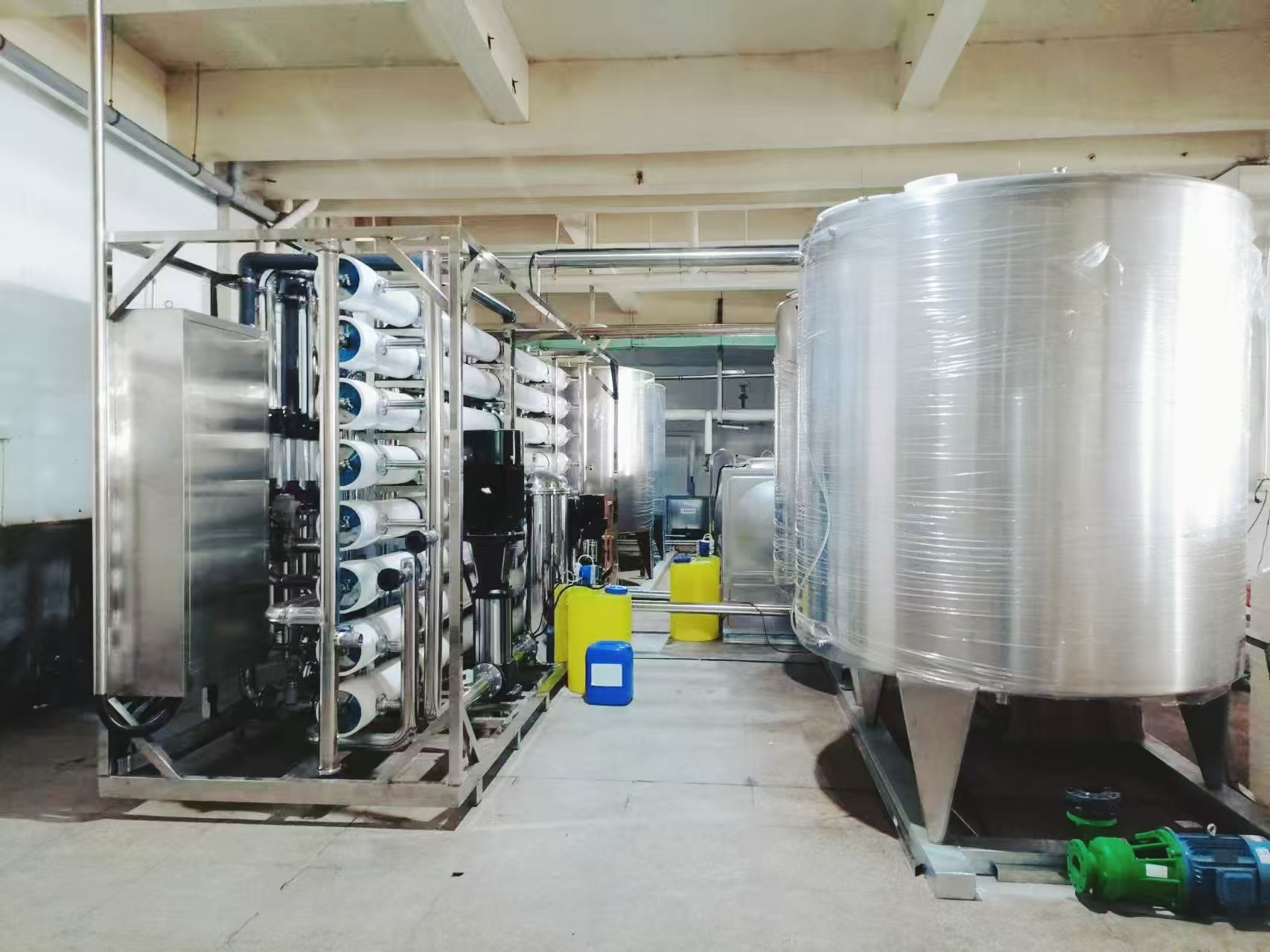
The 40 T/H Two-Stage Reverse Osmosis Pure Water System is a medium-to-large-scale pure water production system designed for the manufacturing and processing of food products, dairy products, and plant-based protein beverages (e.g., soy milk). This system uses municipal tap water or pre-treated water as its feed source and employs a comprehensive treatment process comprising "pre-treatment + two-stage reverse osmosis (RO) + sterilization + storage and distribution." With a rated production capacity of 40 tons per hour (40 T/H), the system ensures consistent water quality that meets the high-purity standard of ≤ 5 μS/cm conductivity, making it ideal for food and beverage production lines with stringent requirements regarding water quality safety, stability, and hygiene parameters.
Compared to a single-stage reverse osmosis (RO) system, a two-stage RO system employs two sequential membrane separation stages for desalination; the second stage further removes residual ions, organic compounds, and microbial metabolites from the primary product water, thereby significantly increasing the system's desalination efficiency, substantially reducing the conductivity of the treated water, and enhancing its resilience to water quality fluctuations. For process steps such as the production of food and dairy products or soybean milk – where product taste, shelf life, and food safety are critical – the two-stage RO process offers distinct advantages in ensuring water quality.
Water serves as the core raw material and process medium in the production of food products, dairy products, and soybean milk. From raw material cleaning and dilution to equipment CIP cleaning, finished product cooling, and boiler feedwater supply, the quality of pure water directly impacts product quality and an enterprise's compliance compliance.
In dairy product manufacturing, pure water is used for powder reconstitution, preparation of fermentation substrates, pasteurization cooling, and in-line pipeline cleaning (CIP). If the levels of water hardness ions, chloride ions, or microorganisms exceed permissible limits, this can easily lead to issues such as equipment scaling, deterioration of product flavor, or shortened shelf life. In the production of soy milk and plant-based protein beverages, large quantities of pure water are required for soybean soaking, grinding, cooking, and blending processes; residual chlorine, iron, manganese, and other impurities in the water can directly affect the color of the soy milk, the control of the soybean aroma, and the stability of the final product.
Relevant national food safety standards (e.g., GB 5749 – Hygienic Standard for Drinking Water and GB 14881 – General Hygienic Specifications for Food Production) specify clear hygienic and sensory requirements for production water. For process water that is added directly to food or comes into direct contact with food surfaces, enterprises are typically required to maintain the water quality at a level significantly higher than that of ordinary drinking water. The water produced by this equipment has a conductivity of ≤ 5 μS/cm, corresponding to a desalination rate of over 99%; it effectively removes dissolved salts, colloids, microorganisms, and most organic substances, fully meeting the hygienic and process requirements for food-grade pure water.
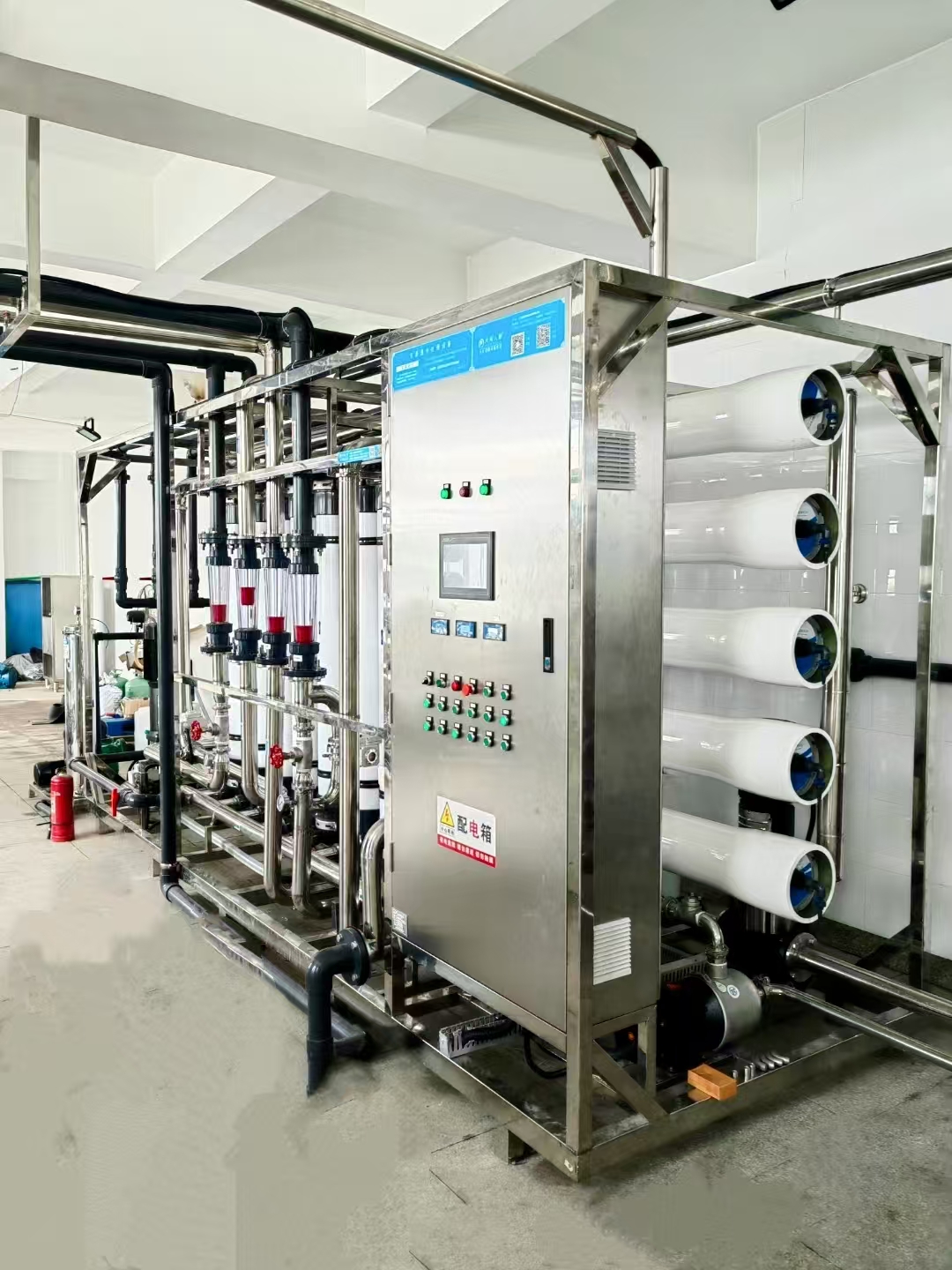
This equipment employs a multi-stage barrier and progressive purification process design; the overall workflow is as follows:
1. Raw water pretreatment unit: Removes suspended solids, colloids, residual chlorine, odors, and certain organic compounds from the raw water using a multi-media filter, an activated carbon filter, and a safety filter (precision filter), thereby protecting the subsequent reverse osmosis membranes from contamination and oxidative damage.
2. Primary Reverse Osmosis (RO) Unit: After being pressurized by a high-pressure pump, the raw water enters the primary RO membrane module, where an efficient separation of salts from water is achieved under pressure-driven conditions; the desalination rate for the primary product water typically exceeds 98%.
3. Secondary Reverse Osmosis (RO) Unit: The primary treated water serves as the secondary feed water, which is then pumped and subjected to membrane separation for further deep desalination and purification; the conductivity of the final product water is consistently maintained at ≤ 5 μS/cm.
4. Sterilization and Disinfection Unit: Equipped with a UV sterilizer or an ozone generation device for terminal disinfection of the treated water, ensuring compliance with microbial quality parameters and meeting the hygiene requirements for food production.
5. Storage and Supply Unit: The pure water tank (sterile storage tank) is integrated with a variable-frequency constant-pressure water supply pump to ensure stable water pressure at point of use and fresh water quality, thereby preventing secondary contamination during the storage process.
The entire system employs PLC-based automatic control, featuring functions such as automatic flushing, water shortage protection, high-and low-voltage protection, online water quality monitoring, and fault alarm systems, enabling continuous, stable, and unattended operation.
The main equipment configuration includes: a stainless steel frame and piping system; a multi-media filter; an activated carbon filter; a precision safety filter; a primary high-pressure pump; a secondary booster pump; a two-stage reverse osmosis membrane module and membrane housing; an electric PLC control system; an online conductivity meter; an ultraviolet/ozonization disinfection unit; a pure water tank; and a constant-pressure water supply system. The main technical parameters are listed in the table below:
project | technical parameter |
unit type | 40 T/H Two-Stage Reverse Osmosis Pure Water System |
Rated water output capacity | 40 m³/h ( 40T/H ) |
Water intake source | Municipal tap water or compliant surface/water groundwater |
Water production conductivity | ≤ 5 μs/cm ( 25℃ ) |
System desalination rate | ≥ 99% |
Water inlet pressure requirement | 0.2 – 0.4 MPa |
Primary RO operating pressure | 1.0 – 1.6 MPa |
Secondary RO operating pressure | 0.8 – 1.4 MPa |
Recycling Rate | Primary level: approximately 65%–75%; System-wide: approximately 60%–70% |
Membrane element | Imported / High-quality anti-fouling reverse osmosis membrane |
control method | PLC automatic control system with touchscreen HMI interface |
Disinfection method | Ultraviolet (UV) / Ozone – Optional |
material quality | Main frame: SUS304 stainless steel; piping: hygienic-grade |
source | 380V / 50Hz (Three-phase) |
Applicable Industries | Food, dairy products, soy milk, and plant-based protein beverages |
6. Stable and reliable water quality: The dual-stage series desalination design, combined with online conductivity monitoring, ensures that the produced water's conductivity remains consistently below 5 μS/cm over the long term, meeting the requirements for food-grade high-purity water.
7. High process adaptability: The pretreatment system is optimized to suit the specific water quality requirements of food, dairy, and soybean milk production processes, effectively removing residual chlorine, iron/manganese, colloids, and organic matter – thereby extending membrane service life and ensuring optimal product taste.
8. High level of automation: The PLC enables fully automated operation, integrating features such as automatic rinsing, high/low voltage protection, water shortage shutdown, and fault alarms, thereby reducing manual workload and the risk of human error.
9. Sanitary Design Code: Components in contact with treated water shall be made of food-grade stainless steel and utilize sanitary piping systems; the design shall facilitate cleaning and disinfection, in compliance with food production hygiene standards such as GB 14881.
10. Energy-efficient operation: Secondary concentrate can be partially recycled back to the primary stage, thereby increasing the overall recovery rate of the system; the variable-frequency constant-pressure water supply system further reduces energy consumption and operating costs.
11. Modular scalability: The rack-mounted integrated design features a compact footprint and easy installation; the water production capacity can be expanded by connecting multiple units in parallel to meet the expansion requirements of the production line.
This device is widely applicable in the following scenarios:
· Dairy products manufacturers: water for milk powder reconstitution, water for fermentation substrate preparation, water for pasteurization cooling, and water for CIP cleaning.
· Soy milk and plant-based protein beverage production facilities: water for soybean soaking, grinding, boiling, blending, and final product cooling.
· Other food and beverage production processes: water for beverage preparation, purified water filling, brewing, canning, baking, and other industrial applications.
· Supporting utility services: feed water for the food processing plant boiler, cooling circuit makeup water, and laboratory water supply.
In terms of cost-effectiveness, the 40 T/H water production capacity is well-suited to meet the continuous water demand of medium-sized food and beverage production lines. The dual-stage RO process provides a reliable quality assurance equivalent to that of higher-grade pure water at a relatively reasonable investment cost, helping enterprises enhance product consistency, extend shelf life, and mitigate the risk of quality-related complaints or production downtime caused by fluctuating water quality. For procurement and technical managers, this equipment strikes an optimal balance between meeting water quality standards, operational stability, compliance with hygiene regulations, and total lifecycle cost – making it the ideal solution for both upgrading existing pure water systems and implementing new pure water systems in food and dairy product manufacturers as well as soy milk producers.
To ensure the long-term stable operation of the equipment and the quality of the produced water, it is recommended to adhere to the following maintenance guidelines:
12. Pre-treatment consumables replacement: Multi-media Filters and Activated Carbon Filters should be backwashed or their filter media replaced periodically depending on the influent water quality and pressure differential; the protective filter cartridge should generally be replaced every 1–3 months to prevent membrane element clogging.
13. Membrane system maintenance: Record daily water production volume, water production conductivity, and operating pressure; perform periodic (e.g., monthly) Clean-in-Place (CIP) chemical cleaning of the system to remove scaling and organic contamination from the membrane surface; during extended shutdowns, subject the system to immersion in a protective solution in accordance with established procedures.
14. Sterilization equipment maintenance: UV lamps should be replaced periodically according to their rated service life; the ozone generator should undergo regular inspections for concentration levels and leakage; the pure water tank should be cleaned and disinfected periodically to prevent microbial growth.
15. Instrument and Automatic Control Calibration: Online conductivity meters, pressure and flow sensors should be regularly calibrated to ensure accurate monitoring data and reliable protection logic.
16. Regular water quality testing: In addition to online monitoring, it is recommended to periodically engage a third party to conduct comprehensive hygiene and physicochemical parameter tests on the treated water to ensure compliance with relevant food safety standards.
17. Operational record archiving: Establish a comprehensive equipment operation and maintenance ledger to facilitate traceability, optimize operational parameters, and support food safety system audits.


Tel