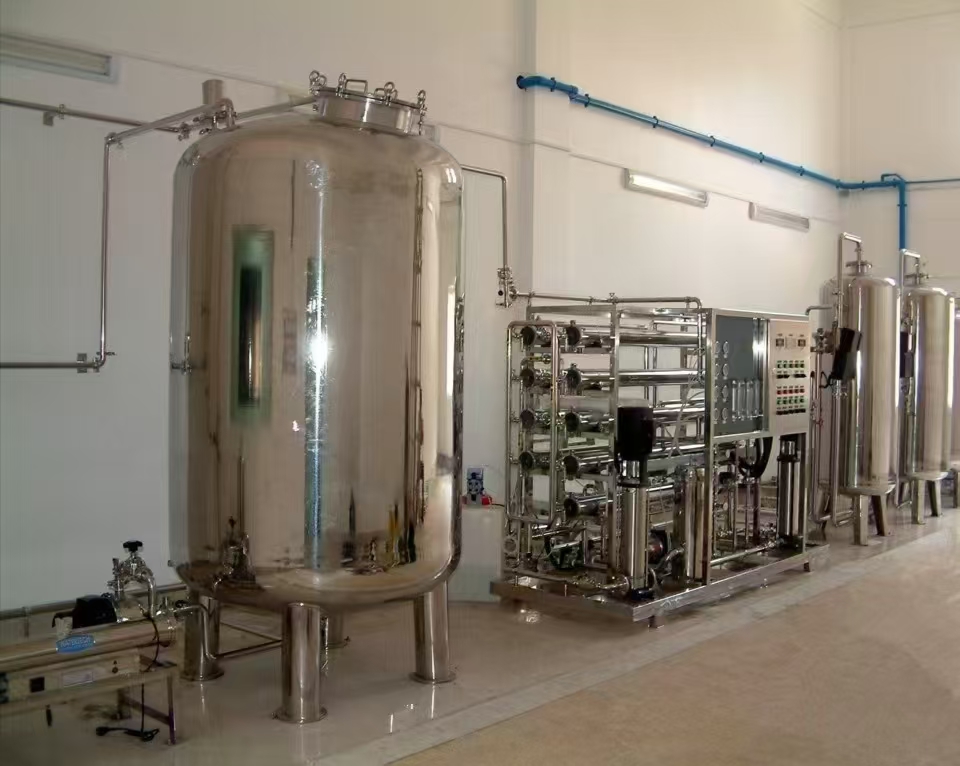
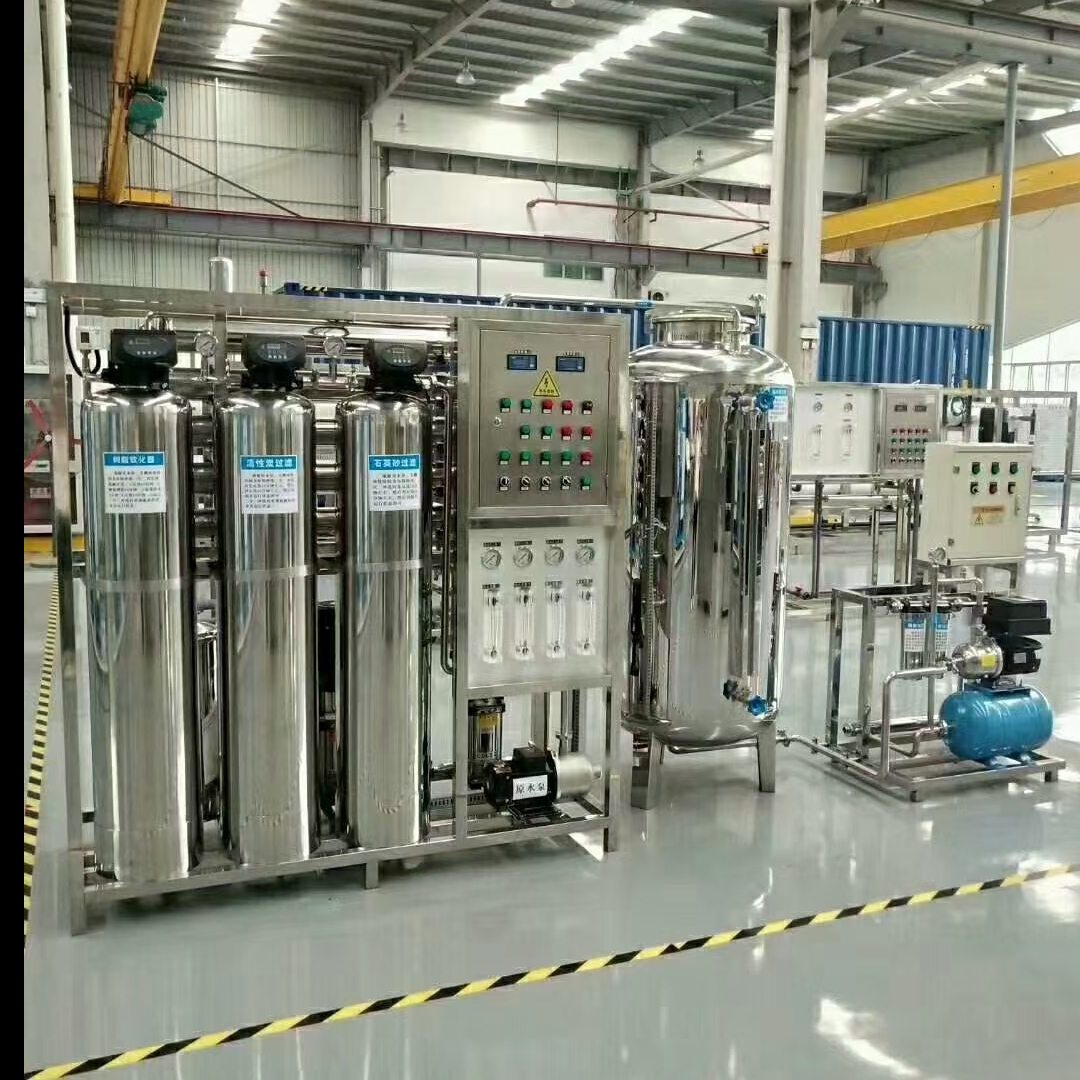
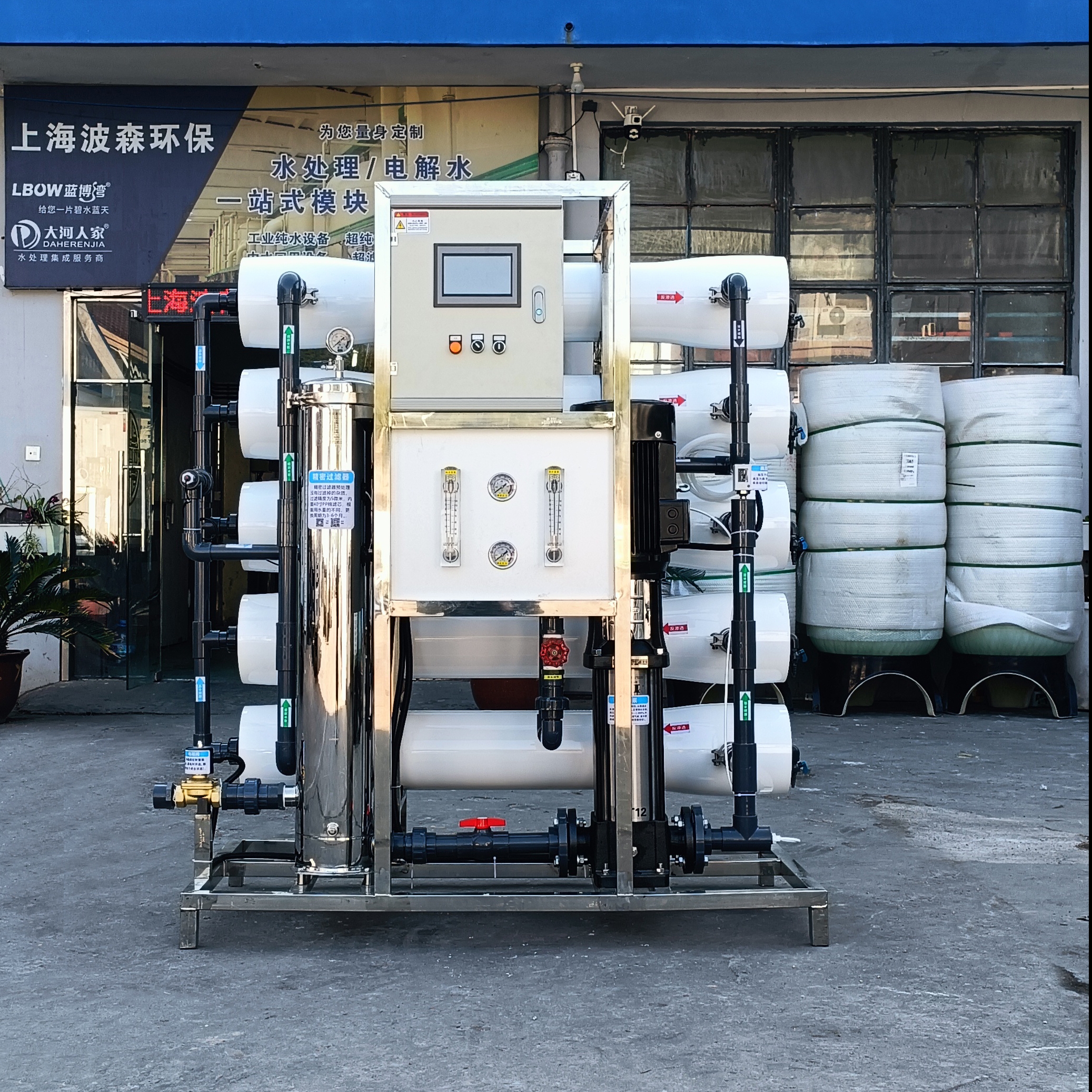
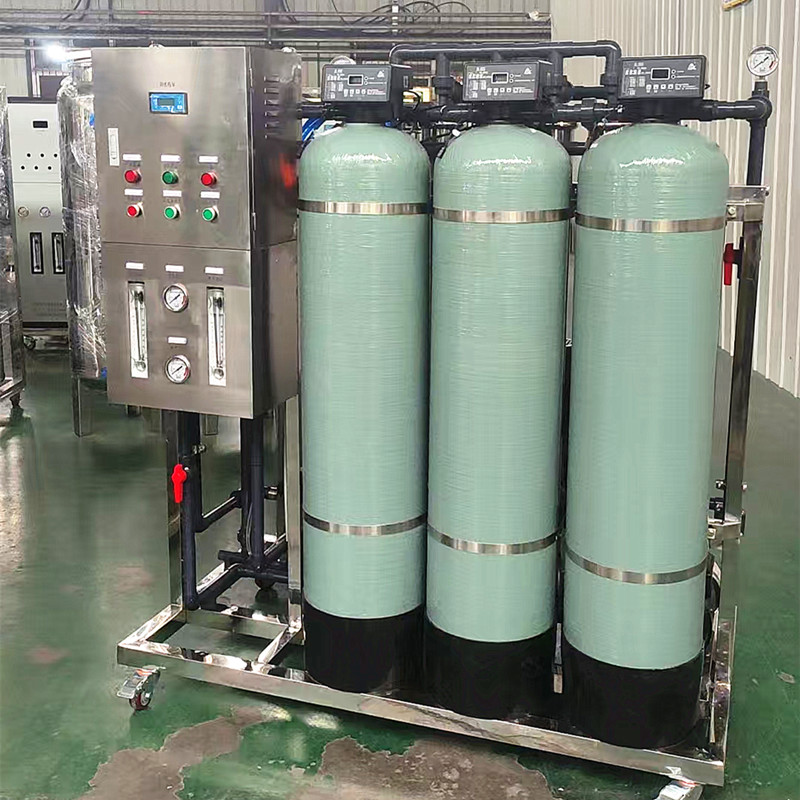
The Reverse Osmosis (RO) system is water treatment equipment that removes salts by means of semipermeable membranes under pressure difference. Opposite to natural osmosis, the process is defined as reverse osmosis. Utilizing the different osmotic pressures of various substances, RO systems can achieve separation, extraction, purification and concentration. Reverse osmosis can eliminate more than 97% of dissolved salts and over 99% of colloids, microorganisms, trace substances and organics in raw water. Advantages include low power consumption, no pollution, straightforward process, superior product water quality, and convenient operation and maintenance.
RO System Process Flow
Raw Water Pump → Quartz Sand Filter → Activated Carbon Filter → Water Softener → Security Filter → High Pressure Pump → Reverse Osmosis System → UV Sterilizer → Ozone Sterilizer → Product Water Tank
1. Raw Water Pump:
Supplies operating pressure for quartz sand filter and activated carbon filter.
2. Quartz Sand Filter:
Removes turbidity, suspended solids, colloids and organic matter.
3. Activated Carbon Filter:
Eliminates color, free chlorine, organic substances and harmful contaminants.
4. Water Softener:
Removes calcium and magnesium ions from raw water to reduce water hardness.
5. Security Filter:
With 5μm filtration precision, it intercepts large particles such as iron fragments, dust, suspended solids and impurities, preventing them from entering and fouling the RO membrane; it also blocks most bacteria and viruses.
6. High Pressure Pump:
Delivers high pressure (minimum 2.0 MPa) to the reverse osmosis system.
7. Reverse Osmosis System:
The core unit of pure water treatment equipment. It achieves a salt rejection rate up to 99%, removing over 99% of ions, bacteria and particulates, as well as more than 98% of organics.
8. UV Sterilizer:
Inactivates bacteria that may pass through the reverse osmosis system.
9. Ozone Sterilizer:
Uses ozone to eradicate bacteria not eliminated by UV sterilization.
10. Product Water Tank:
For storage of treated pure water.
Features: Primary desalination with salt rejection rate 95%–98%, lower investment and energy consumption.
Applications
· Commercial drinking water: residential communities, hotels, schools, office buildings, bottled water factories
· Food & beverage industry: beverage formulation, fruit & vegetable washing, brewing process water
· General industry: boiler makeup water, circulating cooling water supply, textile printing & dyeing, electroplating rinsing
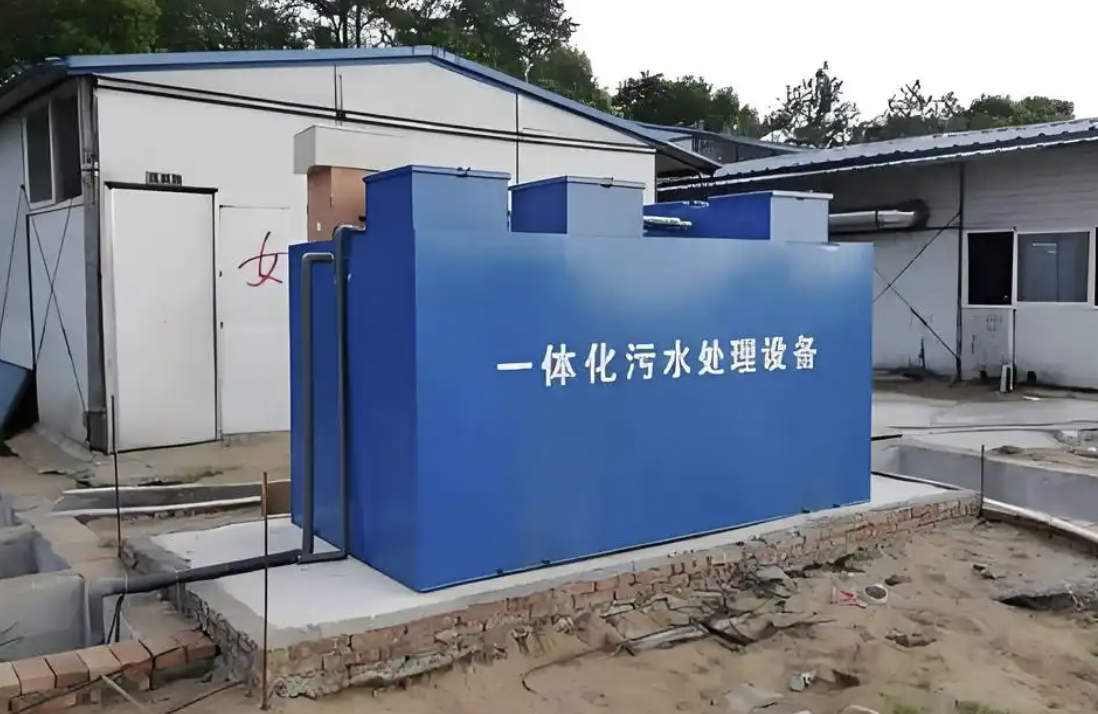
· Camps & mining sites: brackish water desalination, domestic drinking water for construction sites
· Southeast Asia projects: advanced purification of municipal tap water for resorts and residential water supply

 Application