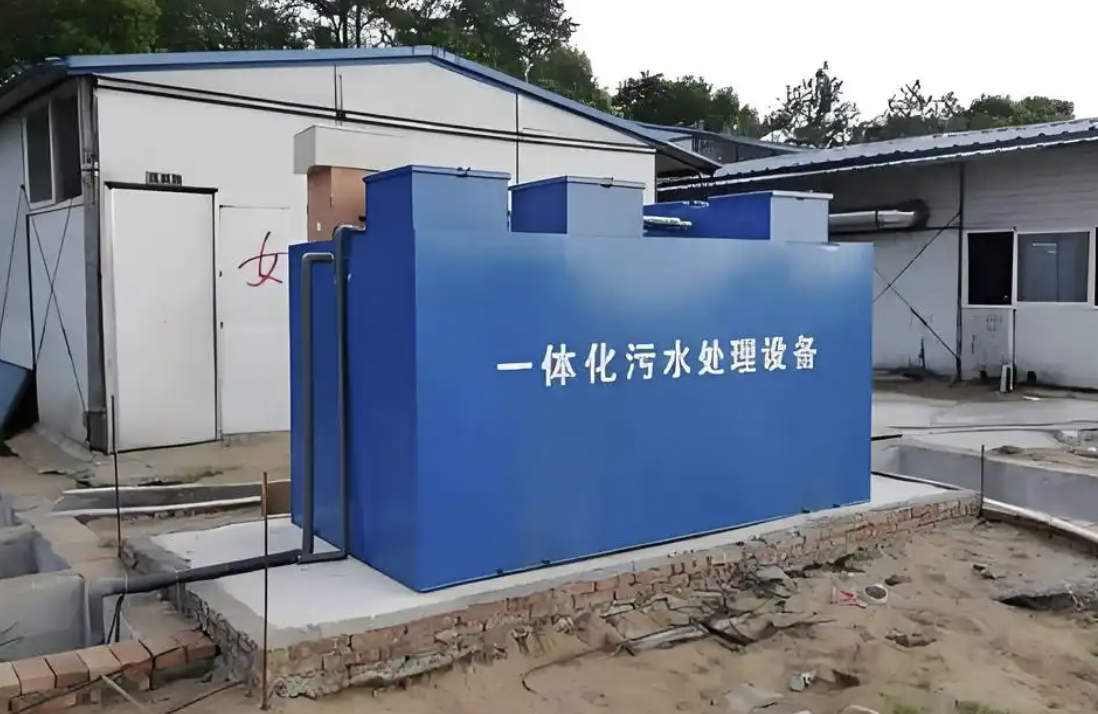
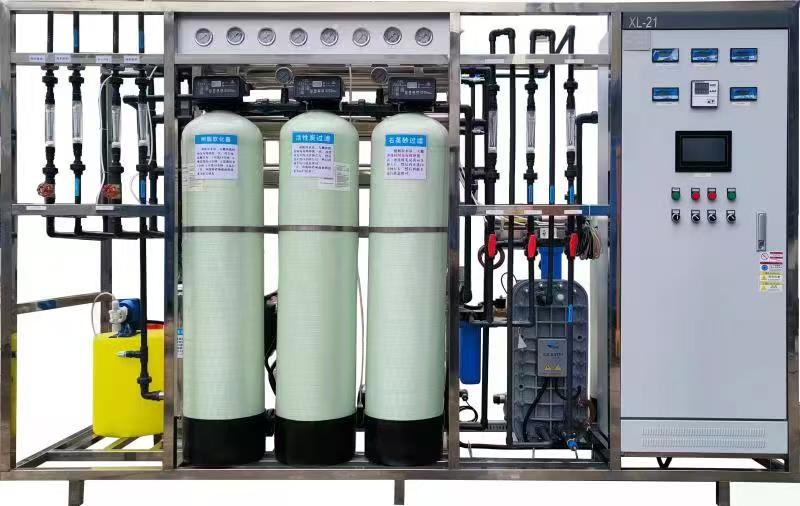
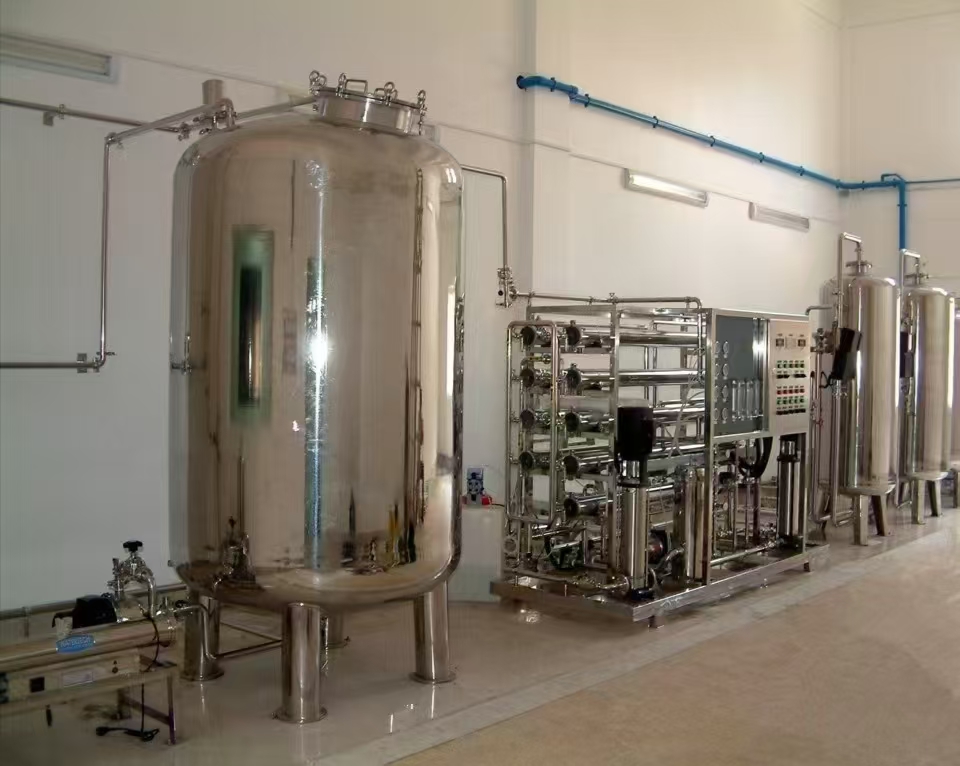
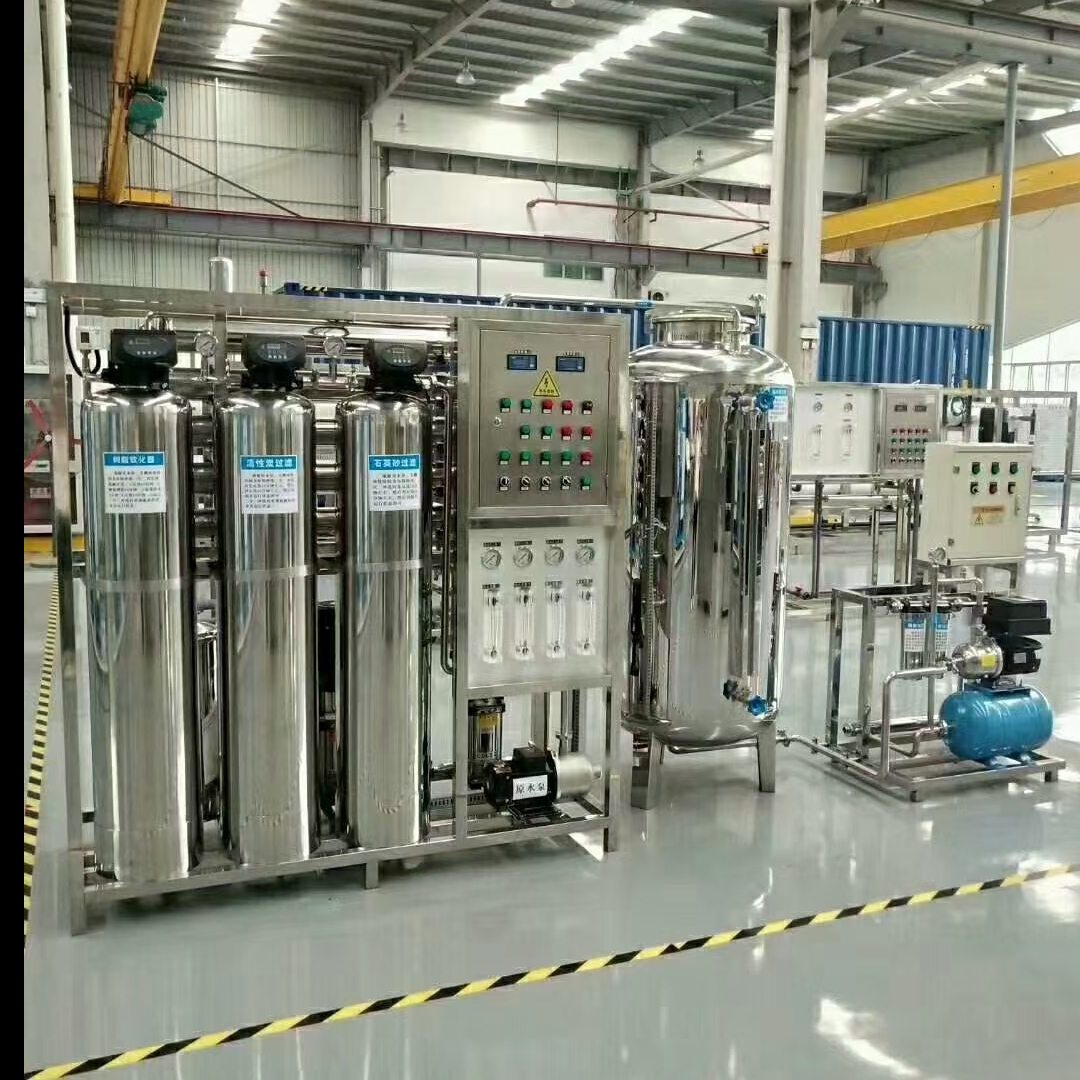
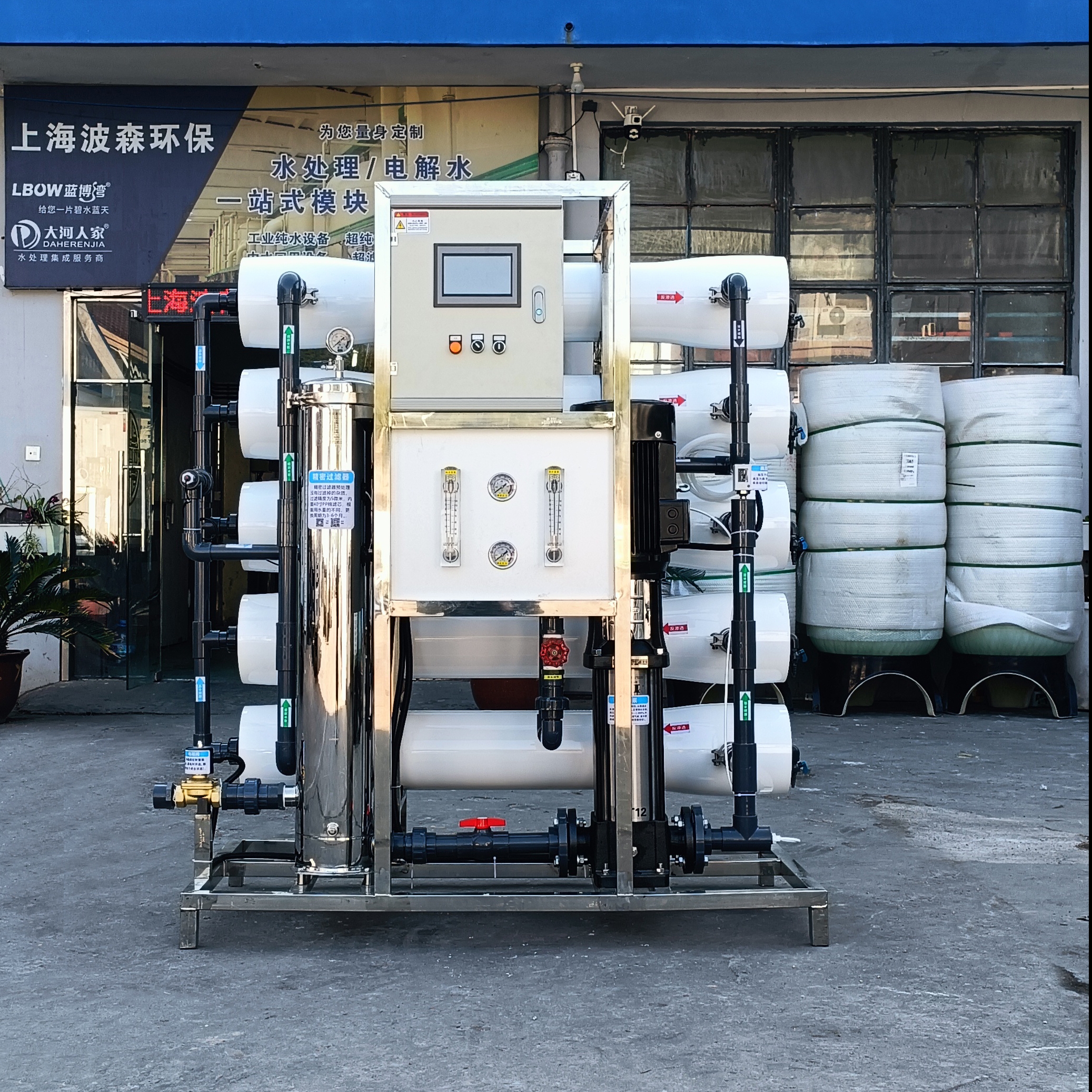
The EDI device is a pure water production device that combines electrodialysis, ion exchange, and ion electromigration technologies. It utilizes electrochemical reactions and ion exchange principles, leveraging the selective permeation of cations and anions on ions and the ion exchange of ions in water by ion exchange resins. This process, under the influence of an electric field, achieves directional ion migration in the water, achieving deep purification and desalination, producing high-purity water.
Process flow:
Raw water → Raw water tank → Raw water pump → Quartz sand filter → Activated carbon filter → Resin softening filter → Precision filter → First-stage high-pressure pump → First-stage reverse osmosis system → PH dosing device → Second-stage high-pressure pump → Second-stage reverse osmosis system → Pure water tank → EDI water supply pump → EDI module → Terminal ammonia seal water tank → Terminal variable frequency water supply pump → Ultraviolet sterilizer → Microporous filter → Water point
1. Raw Water Booster Pump
Maintains constant system water supply pressure and provides sufficient water flow for subsequent systems.
2. Quartz Sand Filter
Mainly removes silt, rust, colloids, suspended solids, and other particles larger than 20 μm from raw water.
3. Activated Carbon Filter
Removes pigments, odors, and reduces residual nitrogen and other contaminants.
4. Resin Softening Filter
Adsorbs calcium and magnesium ions in the water, reducing hardness and preventing scale buildup.
5. Precision Filter
The precision filter is used to intercept small amounts of mechanical impurities that escape the pretreatment system. It contains a PP cotton filter element and filters particles as small as 5 μm to meet reverse osmosis feedwater requirements.
6. High-Pressure Pump
The primary and secondary high-pressure pumps provide pressure for the primary and secondary reverse osmosis systems, respectively.
7. Reverse Osmosis Membrane System
After reverse osmosis treatment, the impurity content in the water is reduced, improving water purity. Its desalination rate can reach over 97%, and it removes most bacteria, colloids, and high-molecular-weight organic matter.
8. Flowmeter
This allows you to clearly monitor the current pure water and brine flow rates, visually displaying the ratio of pure water to brine, facilitating system adjustments based on the desired ratio and output.
9. Pressure Gauge
This monitors the pressure differential across the membrane system, which is crucial during actual operation.
10. Electronic Control Unit/Online Instrument Display
The control cabinet uses a 24V transformer, ensuring safe voltage operation for all control components. Operation is intuitive, with indicator lights clearly indicating operating status. Internal wiring is neatly arranged, with each wire numbered, making the overall design easy to understand and operate.
11. EDI Device
The EDI device is a pure water production device that combines electrodialysis, ion exchange, and ion electromigration technologies. It utilizes electrochemical reactions and ion exchange principles, leveraging the selective permeation of cations and anions on ions and the ion exchange of ions in water by ion exchange resins. This process, under the influence of an electric field, achieves directional ion migration in the water, achieving deep purification and desalination, producing high-purity water.
Applications
· Electronics, semiconductor, PV and lithium battery manufacturing
· Laboratories, inspection and scientific research institutions
· Biopharmaceuticals, medical device production
· Optical component cleaning
· Power plant high-pressure boiler feed water
· High-end cosmetics and fine chemical production